Preface HealthSep 2025 → Apr 2026
Designing E2E product experiences for clinics and patients.
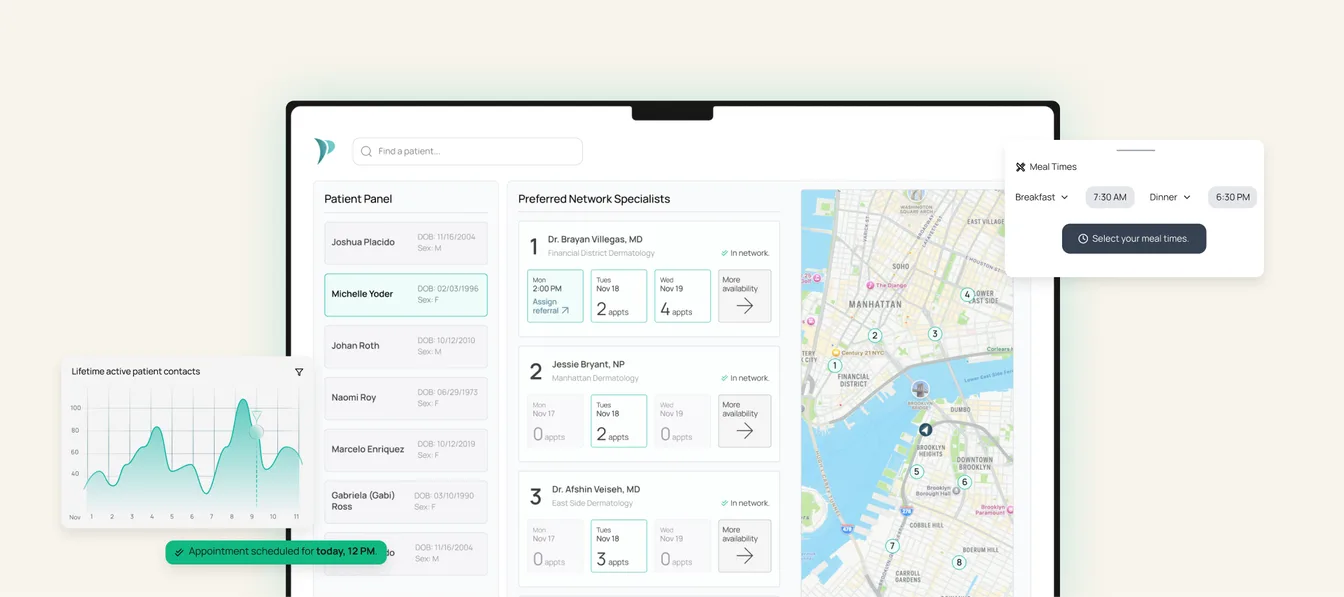
Preface Health is an AI health tech startup that follows up with patients to help clinics with triaging care.
As the first design intern on the team, I worked closely with the co-founders to lead the E2E design for a new chat interface for patients and dashboards for clinics, spearheading a new design system to unify with marketing assets.
Two Problem Spaces
Tech has overcomplicated healthcare for older patients.
Older patients struggled to orient with AI to discuss sensitive health information. They often lacked context and the tech familiarity to complete tasks like creating timed reminders to take medicine, where touchpoints became barriers.

Greg, 65
- Requires cardio follow-up
- At-risk for a heart attack
- Lives alone

Barbara, 71
- Has Alzheimer’s disease
- Forgets to take her medication
- Uses tech for emergencies only
HMW design an accessible AI interface that older patients trust?
As an AI-powered patient follow-up system became central to our product, clinics also needed a way to stay connected with their patients post-appointment.
Since most interactions occur outside our UI, we built a platform for clinics to reach patients directly via SMS.

53%
increase in day-one patient response rate via SMS vs. phone
50-100%
longer task completion time in apps for older adults vs. SMS
HMW design a clinic workflow to send personalized outreach — without relying on patients to come back to the app?
Process
The nature of this work is confidential. Reach out to hear more about the process!
Takeaways
Great design is invisible.
Our target users are patients who have greater concerns than tech fluency. The best designs aren’t the fanciest or most colorful, but ones that help a user achieve their goal.
Design systems make room for the unknown.
Building reusable components and documenting my decisions helped me match the pace of the team. After each sprint, I became faster and more efficient.
Ask questions, and more questions.
Tight design sprints involve understanding a problem space quickly. By gaining clarity about our users and being clear about my process, I rescoped my designs to align them to company needs.